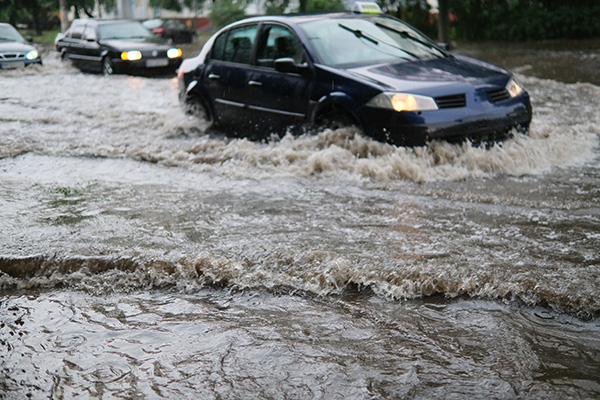
Driving through floodwater can damage much more than the engine. The transmission sits low in the vehicle, and water can reach seals, vents, electrical connectors, and cooler lines long before the water looks deep enough to cause a problem from the driver's seat.
The risk depends on how high the water was, how long the vehicle stayed in it, whether the transmission was hot, and whether water found a path inside. If a vehicle has been through standing or moving floodwater, we would rather inspect it early than wait for shifting problems to appear later.
Water Can Enter Through the Transmission Vent
Automatic transmissions need a vent because the fluid and air inside expand as the unit heats up. That vent is normally high enough to stay dry during ordinary rain and road spray, but floodwater is different.
If water rises high enough around the transmission, it can enter through the vent and mix with the fluid. Once that happens, the transmission loses the clean lubrication and hydraulic fluid it depends on. Water inside the unit can attack bearings, clutch materials, valves, and other internal parts.
Contaminated Fluid Can Lose Its Ability to Protect the Transmission
Transmission fluid has several jobs at the same time. It lubricates moving parts, carries hydraulic pressure, cools internal components, and helps the clutches apply correctly.
When water mixes with the fluid, those properties change. The fluid can turn milky, pink, or cloudy, and corrosion can begin inside areas that are normally protected. Even a small amount of water is something we take seriously because the transmission has many tight clearances and precision components that do not tolerate contamination well.
Electrical Connectors and Sensors Can Be Damaged Too
Modern transmissions rely heavily on electronics. Solenoids, speed sensors, range sensors, wiring, and control modules all help determine when and how the transmission shifts.
Floodwater can reach connectors and wiring around the transmission even if it never gets inside the case. Corrosion can start at terminals and create intermittent problems later. At our shop, we check both the fluid and electrical side of the system because a transmission that shifts badly after flood exposure doesn't automatically have an internal mechanical failure.
Cooler Lines and Seals Can Create Another Path for Trouble
Automatic transmissions send fluid through cooler lines so heat can be removed before the fluid returns to the unit. Those lines, fittings, and seals are all exposed underneath or near the front of the vehicle.
Flood debris can damage a line, loosen a fitting, or pack mud around components where it should not be. Seals can also be affected if dirty water sits around them for a long period. During an inspection, we look for leaks, damaged lines, mud buildup, and signs that water reached areas that are normally dry.
Do Not Keep Driving If the Transmission Starts Acting Differently
A transmission that has taken in water can begin showing symptoms quickly, or the damage can take time to develop. Either way, a change in shifting after floodwater deserves attention.
You might notice delayed engagement, slipping, harsh shifts, shuddering, unusual noises, or a warning light on the dashboard. If the vehicle suddenly refuses to move properly or the fluid looks contaminated, continuing to drive can circulate water through more of the transmission and increase the damage.
The Right Response Depends on How Much Water Got In
There is a big difference between briefly splashing through shallow water and sitting in floodwater deep enough to reach the transmission case. We look at water depth, exposure time, fluid condition, stored fault codes, and how the vehicle behaves before recommending the next step.
If the fluid shows clear signs of water contamination, simply topping it off is not enough. The transmission needs proper service based on its design and the level of contamination. In severe cases, internal inspection or repair can be necessary because fresh fluid cannot undo corrosion or clutch damage that has already started.
Floodwater Can Damage More Than the Transmission
A vehicle that has been through deep water should be checked as a whole. Differentials, transfer cases, wheel bearings, electrical connectors, starter motors, and other low-mounted components can all be affected.
Regular maintenance doesn't prevent floodwater damage, but knowing the fluid condition and service history makes it easier to spot what changed after the event. If the vehicle has recently been through deep water, an early inspection gives us the best chance to catch contamination before it spreads into a larger repair.
Get Floodwater Transmission Inspection In Orange Park, FL, With Transmission Hero
If your vehicle has been driven through deep standing water or floodwater, Transmission Hero in Orange Park, FL, can inspect the transmission fluid, cooler lines, electrical connectors, and shifting operation for signs of contamination or damage.
Schedule a transmission inspection before water-related problems lead to internal wear or complete transmission failure.