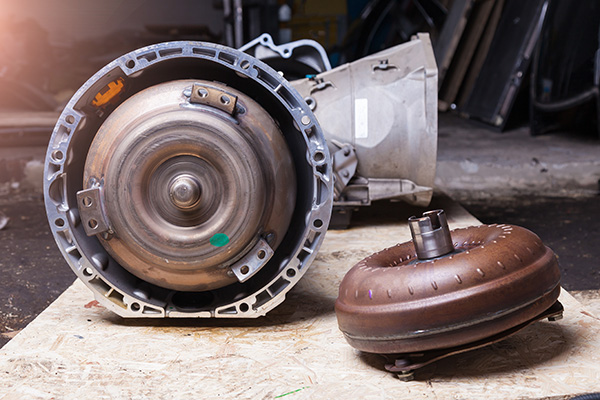
Most drivers never think about what happens between pressing the gas pedal and the car actually moving. In an automatic transmission, one key component that ensures smooth engagement is the torque converter. When it works properly, you do not notice it at all. When it starts to fail, though, the changes can feel confusing and inconsistent.
Understanding what the torque converter does helps explain why certain transmission symptoms show up and why they should not be ignored.
How the Torque Converter Connects the Engine to the Transmission
Unlike manual transmissions, which use a clutch, automatic transmissions rely on a torque converter to transfer power. It sits between the engine and the transmission and uses fluid instead of direct mechanical contact.
When the engine spins, the torque converter uses that motion to move transmission fluid, which then transfers power into the transmission. This allows the car to stay running while stopped and still move smoothly when you accelerate.
It Allows Smooth Acceleration From a Stop
One of the main benefits of a torque converter is its ability to deliver power gradually. When you press the gas, it doesn't lock everything together instantly. Instead, it allows a controlled transfer of power.
This is why automatic vehicles feel smooth when starting from a stop. Without a properly functioning torque converter, you would feel harsh engagement or delayed acceleration.
Torque Multiplication Helps With Initial Movement
Torque converters are designed to multiply torque at lower speeds. This helps the vehicle get moving more easily, especially from a complete stop.
At higher speeds, that multiplication reduces, and the system becomes more efficient. This balance allows for both smooth takeoff and steady performance once the vehicle is moving.
Lock-Up Function Improves Efficiency at Higher Speeds
Many modern torque converters include a lock-up feature. At cruising speeds, the converter can lock internally, creating a more direct connection between the engine and transmission.
This reduces slippage, improves fuel efficiency, and helps lower operating temperatures. When working correctly, the transition between unlocked and locked states is barely noticeable.
Common Signs of Torque Converter Problems
As a torque converter begins to fail, symptoms can be similar to those of other transmission issues. Some of the more noticeable signs include:
1. Shuddering or vibration during acceleration
2. Delayed movement when shifting into drive
3. Slipping sensation while driving
4. Higher engine RPM without matching acceleration
5. Overheating related to transmission fluid
These symptoms often appear gradually, which makes them easy to overlook at first.
Why Torque Converter Issues Can Be Misleading
Because the torque converter is part of the transmission system, problems with it can be mistaken for general transmission failure. Drivers may notice shifting issues or performance changes without realizing the converter is the source.
This is why a proper inspection is important. Identifying whether the issue is the converter or another transmission component helps avoid unnecessary repairs.
Heat and Fluid Condition Play a Major Role
Transmission fluid is essential for torque converter operation. It provides the medium for power transfer and helps keep temperatures under control.
When fluid becomes contaminated or breaks down, it affects how the torque converter performs. Heat buildup increases, and internal components wear out faster. Staying on top of fluid condition through regular maintenance helps prevent these issues.
Why Problems Get Worse Over Time
Torque converter issues rarely stay the same. Small amounts of slipping or vibration can develop into more noticeable performance problems as wear increases.
Over time, these issues can affect the rest of the transmission. What begins as a converter problem can eventually lead to broader system damage if left unchecked.
Regular Maintenance Helps Protect the System
Keeping up with regular maintenance is one of the best ways to protect the torque converter. Clean transmission fluid, proper fluid levels, and routine inspection all help maintain smooth operation.
An inspection can also catch early signs of wear before they become noticeable. This helps keep repairs more manageable and prevents unnecessary damage.
When to Schedule a Transmission Inspection
If you notice shuddering, slipping, delayed engagement, or changes in how your vehicle accelerates, it is a good time to have your transmission checked.
Even if the symptoms are mild, they often point to developing issues within the system. An early inspection helps prevent more serious problems and keeps your vehicle running consistently.
Get Transmission Inspection In Orange Park, FL, With Transmission Hero
If your vehicle is showing signs of torque converter or transmission issues, Transmission Hero in Orange Park, FL, can inspect your system and determine the exact cause.
Call today to schedule your appointment and keep your transmission performing the way it should.